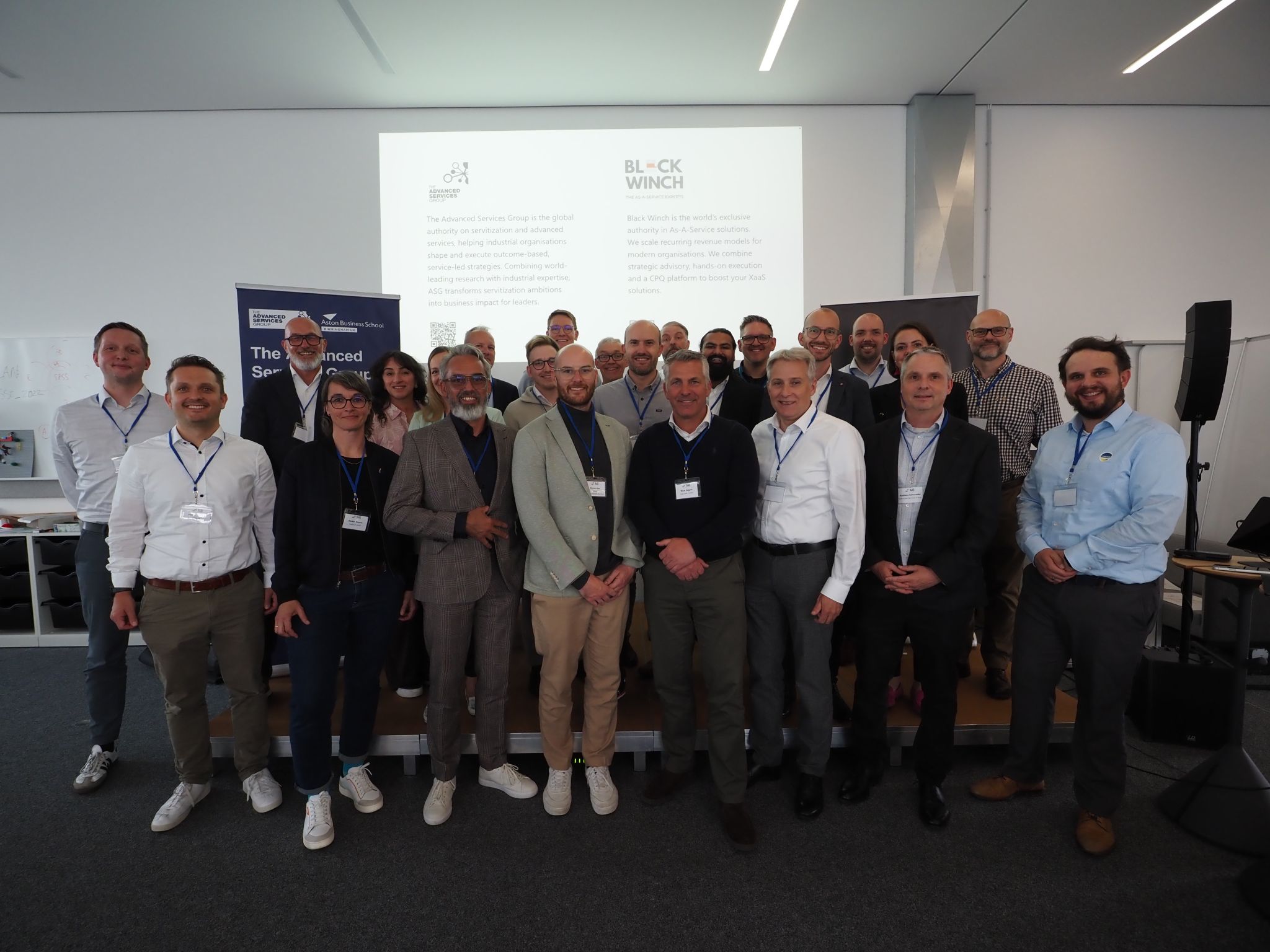
On May 21st, Black Winch and The Advanced Services Group (ASG) hosted the Servitization Bootcamp during the Spring Servitization Conference 2026 in Bochum, Germany.
A one-day executive working session focused on one of the most pressing questions facing industrial companies today:
How do manufacturers move from servitization pilots to scalable As-a-Service businesses?
The Bootcamp brought together senior leaders responsible for service transformation, advanced services, aftermarket growth, and recurring revenue initiatives from across the industrial ecosystem. Participants included market-leading European manufacturers and technology companies with strong positions in sectors such as industrial equipment, automation, energy systems, and advanced manufacturing.
Designed as a practical, hands-on workshop, the day combined:
- The Advanced Services Group’s research and strategic frameworks around servitization,
- Black Winch’s expertise in operationalizing and scaling recurring revenue models,
- real-world industrial case studies,
- and collaborative working sessions focused on implementation challenges.
One conclusion became clear throughout the day:
Servitization is becoming the competitive operating model for industrial businesses.
Building the strategic foundation for servitization
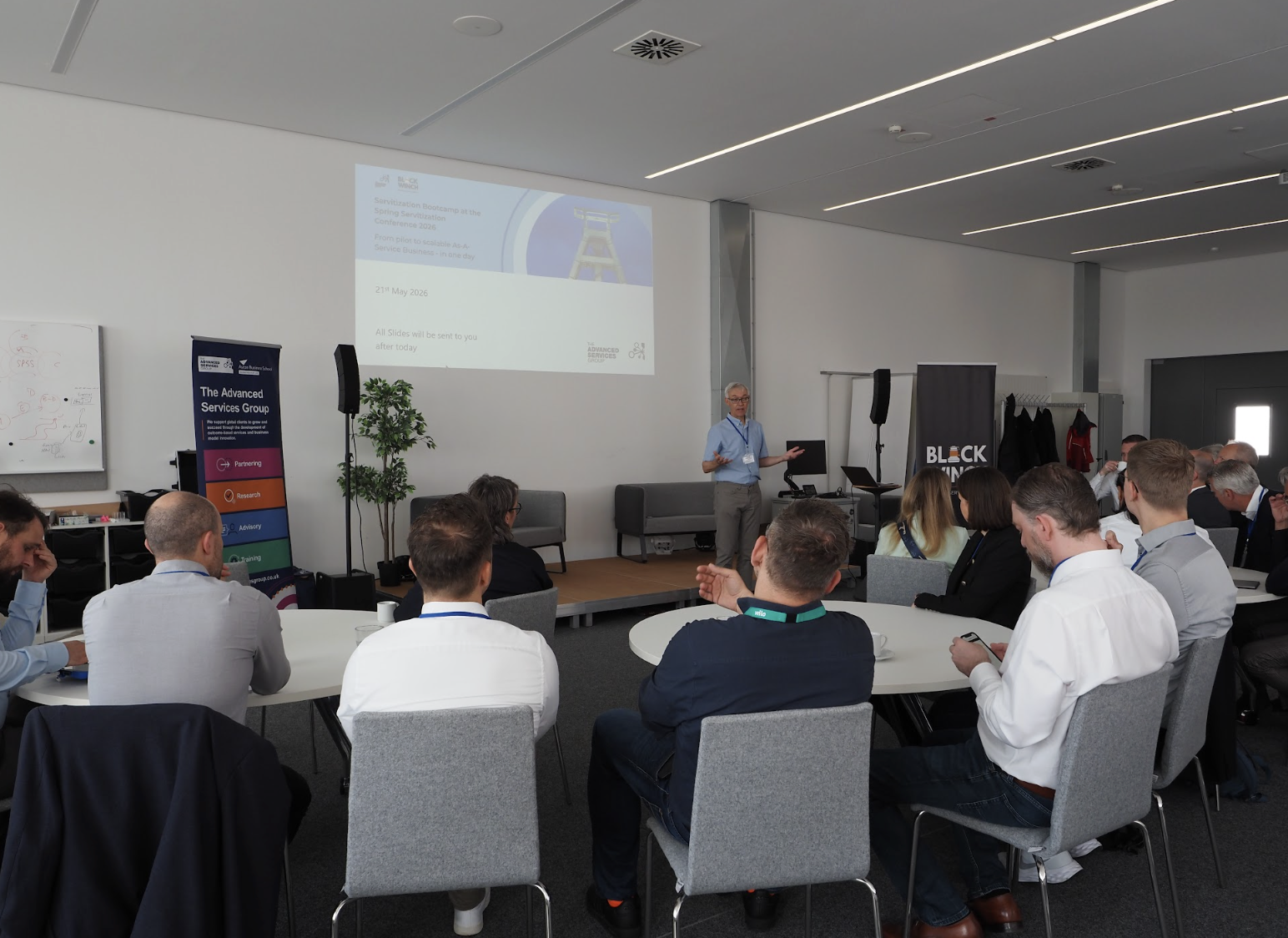
The morning sessions, led by the Advanced Services Group, focused on the business case for servitization and the evolution from product-centric models toward advanced, outcome-based services.
Using research across 700 manufacturing firms, the team demonstrated how higher service intensity correlates with increased revenue, profitability, and productivity improvements.
The discussions explored how manufacturers evolve from:
- basic product services,
- to intermediate maintenance and support services,
- and ultimately toward advanced outcome-based business models.
Real-world examples included:
- Rolls-Royce’s “Power-by-the-Hour,”
- Michelin’s Tyres-as-a-Service,
- Philips Lighting-as-a-Service,
- Kaer’s Cooling-as-a-Service,
- and Alstom’s Train Life Services.
The Advanced Services Group also introduced several strategic tools used throughout the workshops, including:
- the Services Staircase,
- the Servitization Route Planner,
- and the Business Model Blueprint framework.
Turning servitization into scalable XaaS operations
While the morning sessions focused on why servitization matters strategically, the afternoon workshops focused on how companies can operationalize and scale these models in practice.
This is where Black Winch brought the discussion into the operational realities of scaling recurring revenue businesses.
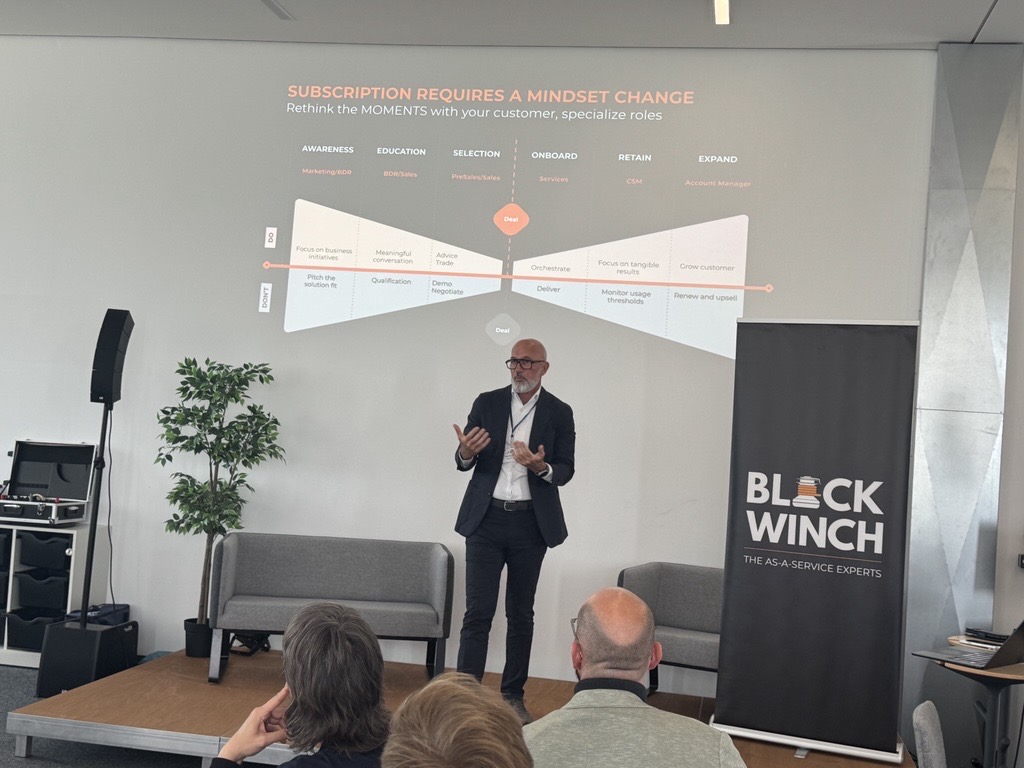
Participants worked through practical questions such as:
- What breaks operationally if recurring customers double?
- Which risks should remain internal versus transferred to partners?
- How does selling outcomes change the sales process?
- What must become standardized before the business can scale?
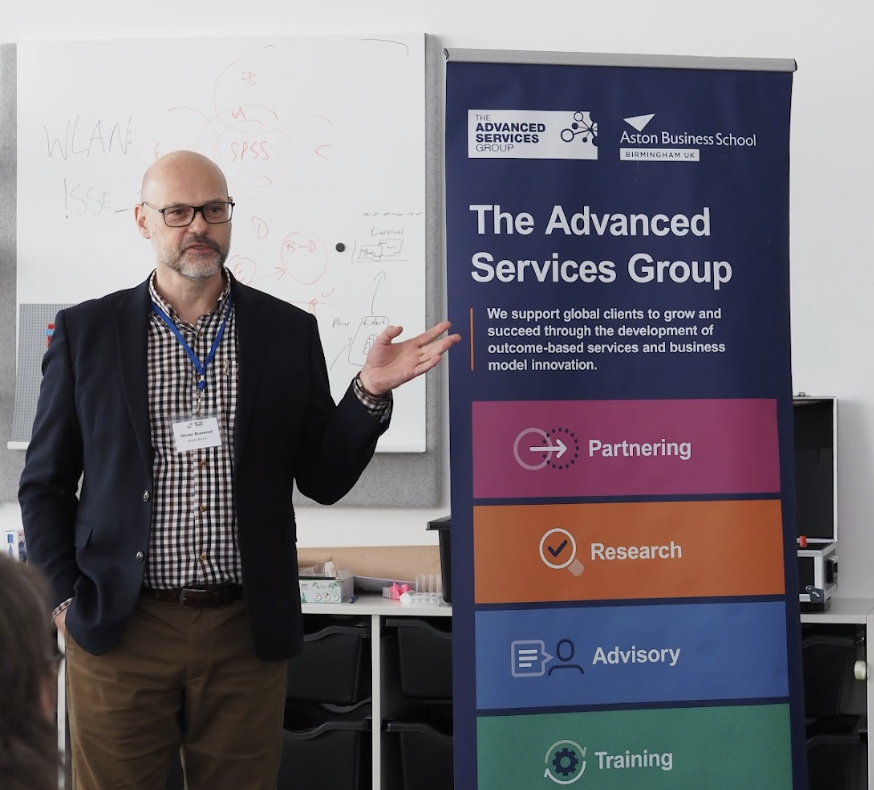
Discussions highlighted common operational gaps around:
- IoT infrastructure,
- predictive maintenance,
- recurring billing,
- customer success,
- and data visibility.
Funding also emerged as a major topic. Conversations focused on:
- working capital requirements,
- residual value risk,
- investment readiness,
- and how manufacturers transition from pilot funding toward scalable financing models.
The sessions reinforced one key idea: scaling recurring revenue requires far more than launching a pilot. It demands new operational capabilities, cross-functional alignment, and standardized processes that can support long-term growth.
The key challenges manufacturers are trying to solve
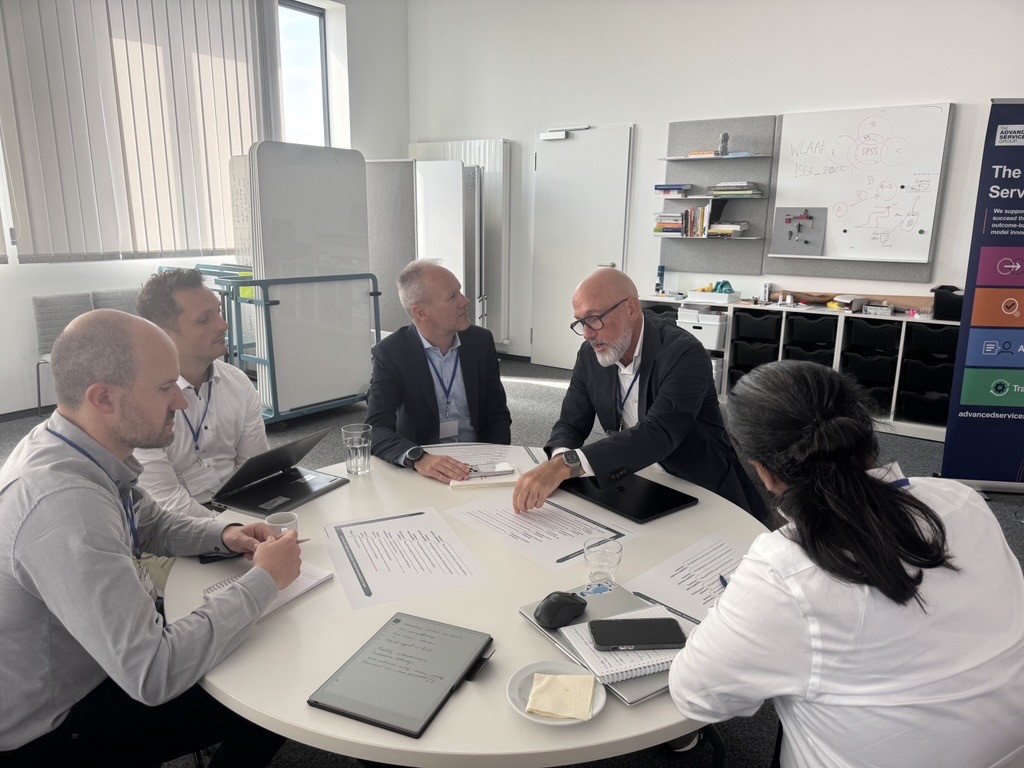
Throughout the Bootcamp, five themes consistently surfaced across the workshops and group discussions:
1. Organizational alignment is critical
Servitization cannot remain a “service department initiative.” Finance, sales, operations, leadership, and ecosystem partners all need to align around long-term customer outcomes.
2. Sales teams must shift from product selling to outcome selling
Manufacturers are moving away from CAPEX-focused conversations toward ROI, uptime, performance, and lifecycle value.
3. New operational capabilities are required
Recurring revenue models depend on capabilities such as customer monitoring, predictive maintenance, onboarding, and customer success management.
4. Funding and risk allocation remain major barriers
Many companies are still trying to define how risk, financing, and ownership should be shared between manufacturers, customers, and partners.
5. Pilots matter, but standardization enables scale
Participants repeatedly emphasized the need to move beyond one-off projects and create scalable processes, pricing models, and customer journeys.
To conclude
The Servitization Bootcamp in Bochum was designed as more than a conference workshop. It was a collaborative working session, and participants left with:
- clearer priorities,
- sharper understanding of scaling barriers,
- and practical next steps for the next 90 days.
What became evident throughout the day is that industrial companies are no longer asking whether servitization matters.
The real question is how quickly they can operationalize and scale it successfully.
A huge thank you to all participants, contributors, and partners who joined us in Bochum.
Facing similar challenges in your servitization journey?
Book a call with our Black Winch team to discuss your priorities and explore how to move from pilot initiatives to scalable recurring revenue models.